




Our gut flora is determined by what we eat, for good or for ill.
When we eat meat (including seafood), dairy, or eggs, our gut flora can take certain components in them (carnitine and choline) and produce something that ends up as a toxic compound called TMAO, which may set us up for a heart attack, stroke, and death. The process is illustrated below and at 0:26 in my video How to Cultivate a Healthy Gut Microbiome with Food.
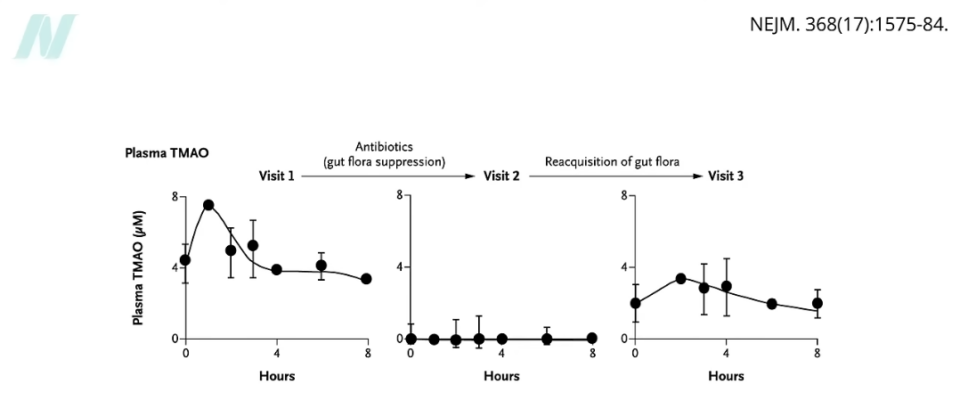
Give people two eggs, and they get a spike of TMAO in their bloodstream within hours of consumption. However, because gut bacteria play a critical role in this process, if they are then given a week of antibiotics to wipe out their gut flora and fed two more eggs, nothing happens. There’s no TMAO in their bloodstream because they have no egg-eating bacteria to make it. But once their gut bacteria have a month to start growing back, the eggs start to cause TMAO production once again, as you can see below and at 1:12 in my video.
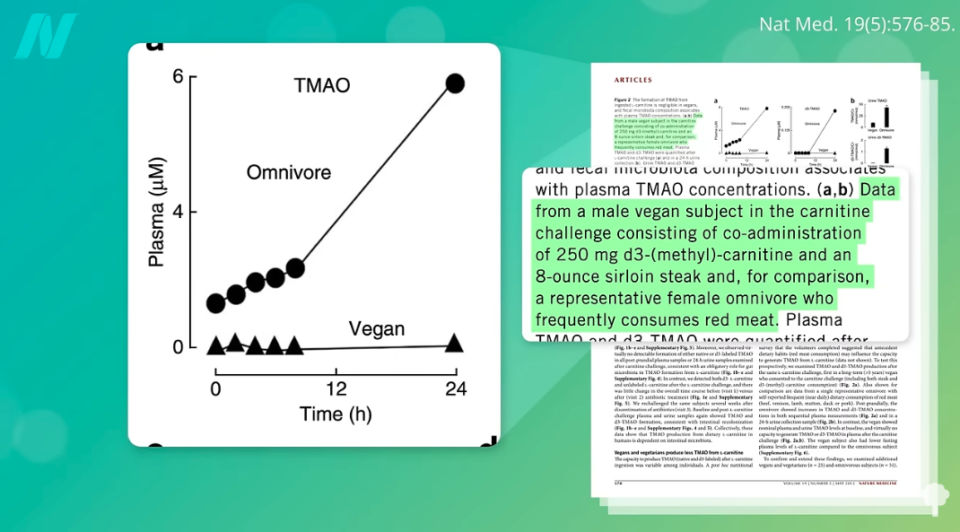
The same thing happens with meat. Give people the equivalent of an 11-ounce steak, and TMAO levels shoot up in the blood. But feed them the same amount after a week of antibiotics, and nothing happens. So, developing problems requires both the meat and the meat-eating bugs. That’s why a vegan can eat a sirloin and not produce TMAO within their body. They just don’t have the meat-eating bugs in their gut. You can see the difference below and at 1:36 in my video.
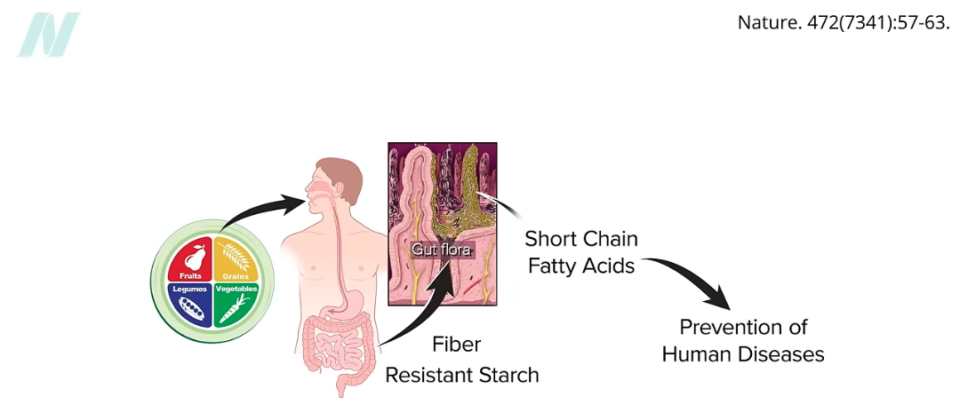
This should all be old news for those who have been following the science. But I want to emphasize: This phenomenon happens the other way around, too. When we eat whole plant foods, like fruits, vegetables, whole grains, and beans, along with nuts and seeds, our gut flora can take certain components in them (fiber and resistant starch) and produce short-chain fatty acids, which can set us up for the prevention of diseases, as you can see below and at 2:07 in my video.
Short-chain fatty acids like butyrate can help seal up a leaky gut, fight inflammation, prevent weight gain, improve insulin sensitivity, accelerate weight loss, and fight cancer.
But these benefits rely on two things—eating fiber and having fiber-feeding bugs—just like the detrimental effects from TMAO required not only eggs, dairy, or meat, but also the egg-, dairy-, or meat-munching bugs.
Give people whole intact grains—in the case of this particular study, barley kernels, also known as barley groats (three servings a day, like I recommend in my Daily Dozen app)—and within just three days of eating that extra 30 or so grams of fiber and resistant starch, their gut bugs were so happy and produced so many short-chain fatty acids that people’s insulin levels improved by 25%, which means their bodies needed to produce less insulin to take care of the same amount of white bread, while still dampening the blood sugar spike. But this was on average.
Some people responded to all that extra fiber with beautiful, striking dips in blood sugar and insulin responses, but in others, the same amount of fiber and resistant starch didn’t work at all. Why? Because fiber alone isn’t enough—fiber-feeding bugs like Prevotella are also needed. How do you get more Prevotella so you can take full advantage of the health benefits of plants? Eat more plants, because “Prevotella abundance is associated with long-term fiber intake.”
Rural African children eating 97% whole food, plant-based diets have Prevotella levels that are off the charts compared to kids eating standard western diets, and this is reflected in the amount of short-chain fatty acids they churn out in their poop.
In the industrialized world, habitually eating vegetarian and vegan diets promotes enriching the gut’s fiber-eating bacteria. Below and at 4:11 in my video, you can see the relative Prevotella abundance between those who eat meat, no meat, or all plants.
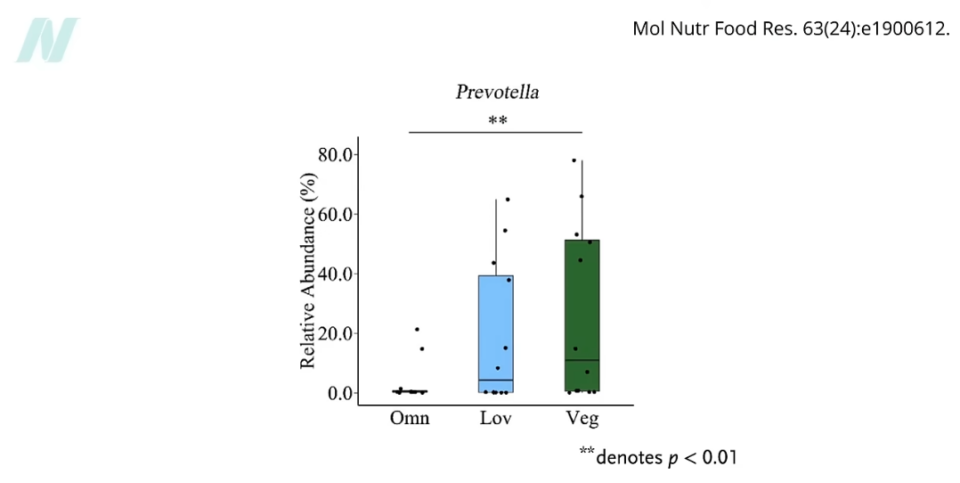
This may help explain why omnivores have a worse inflammatory profile compared to vegetarians. Based on the findings relative to bacteria abundance, the researchers “suggest that exposure to animal foods may favor an intestinal environment which could trigger systemic inflammation and insulin resistance-dependent metabolic disorders,” such as type 2 diabetes. And it’s the reduced levels of inflammation that may be the key factor linking a plant-based gut microbiota with protective health benefits. But can’t meat-eaters eat lots of plants too? Omnivores have “constraints on diet-dependent gut microbiota metabolite production.” In other words, it’s the flipside of the vegan eating a steak—they can eat all the fiber they want but may be lacking in fiber-munching machinery.
At low levels of fiber intake, the more you eat the more of the beneficial short-chain fatty acids are made. But at a certain point your available fiber-feeders are maxed out, and there’s only so much you can benefit, as you can see below and at 5:22 in my video.
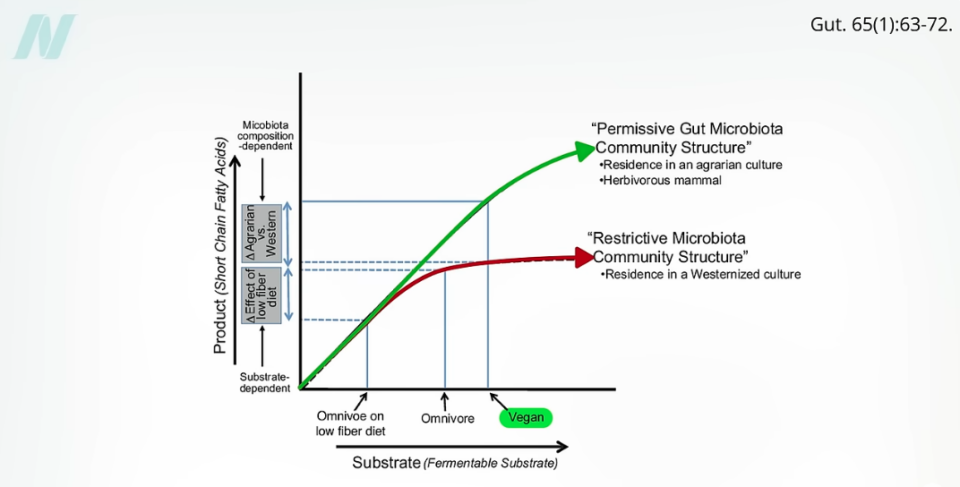
But those habitually eating a plant-based diet have been cultivating the growth of these fiber-feeders, and the sky’s the limit, unless of course you’re eating vegan junk food. But a whole food, plant-based diet should be “effective in promoting a diverse ecosystem of beneficial bacteria to support both human gut microbiome and overall health.”
Doctor’s Note
I have a lot of videos on our microbiome and gut health. Here are some of the most popular ones:
For more on TMAO, see: